


How to Read Your Poetry Aloud: A Guide to Open Mic Nights
Pacing, breath, microphone technique and audience connection: a practical guide to reading your poetry at open mic nights without rushing, mumbling or losing the room.
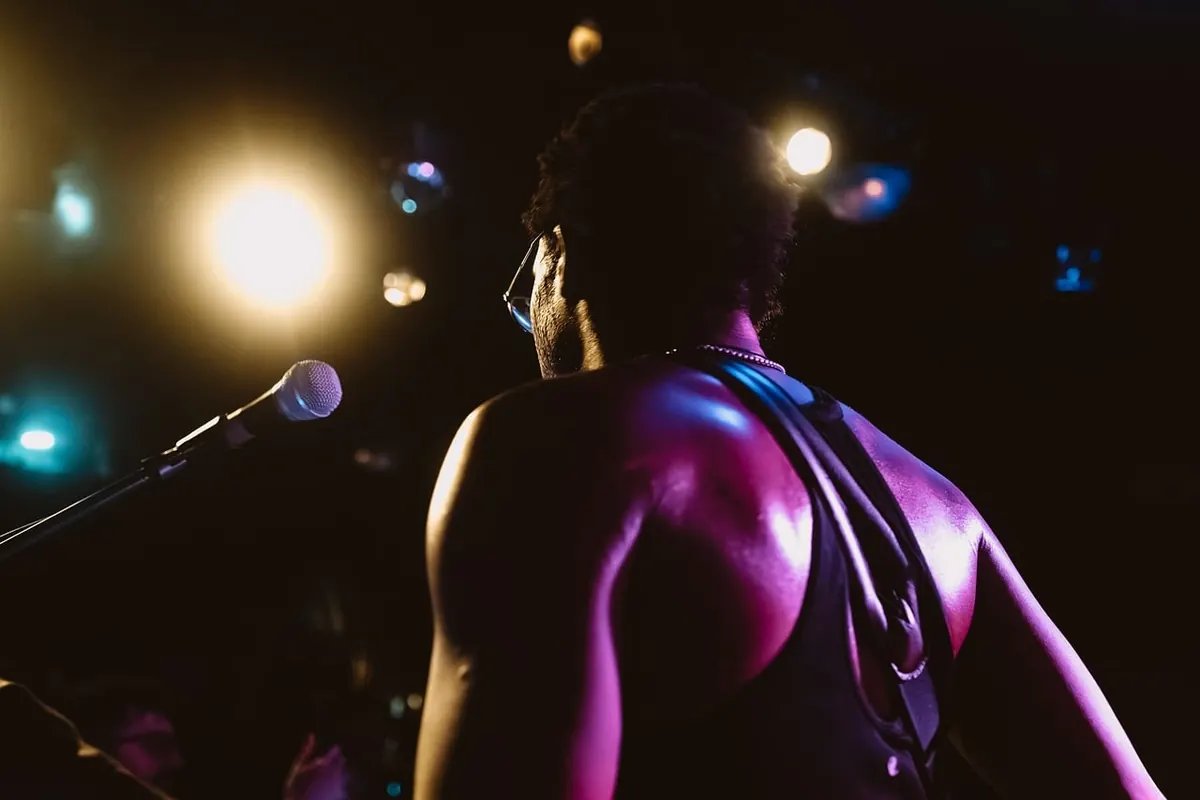
The poem works on the page — you know it does. Then you stand up in a back room above a pub, take the microphone, and the first line arrives too fast, too flat, or too quiet to reach the back of the room. The audience nods politely. You sit down convinced the poem failed, when really it was the delivery that let it down.
Nothing happened to the poem. What happened is that writing and speaking are two different skills, and an open mic asks you to switch between them in front of strangers, under lights, with a microphone in your hand and a pint glass sweating onto your notes. The good news is that reading aloud is learnable. It is not charisma, and it is not confidence. It is craft, and like any craft it responds to practice.
This guide is for anyone who has written something they believe in and wants it to land in a room. It covers preparation, the first thirty seconds, microphone technique, and how to survive the nights when it all goes sideways.
Why Reading Aloud Changes the Poem
On the page, the reader controls the pace. They can linger on a line, go back, stop and look out of the window. Aloud, you control the pace, and the audience only gets one pass. That single difference changes almost everything.
It changes line breaks. A break that feels dramatic on the page can become an awkward stutter in the mouth.
It changes punctuation. Commas and full stops are, among other things, instructions for breathing, and a poem with no full stops for twenty lines is a poem that will leave you gasping halfway through.
It changes repetition. Words that look elegant when repeated twice can sound like a mistake when repeated three times aloud, and words that look flat on the page can become a refrain when spoken.
It also changes what the audience hears. They are not reading; they are listening. Anything that depends on layout, on white space, on a word sitting alone in the middle of a line, needs to be translated into sound or accepted as invisible.
Write for the eye if you like. But if you are going to stand up and read, you have to write for the ear as well — or at least be willing to let the ear edit what the eye made.
Before You Get to the Mic
Most bad readings are decided before the reader stands up. Preparation is unglamorous and it is where the whole thing is won.
Mark Up the Page for the Mouth
Print the poem in a large, plain font — fourteen point minimum, double-spaced, with wide margins. Then mark it up the way an actor marks a script.
- Underline the words you want to hit hardest.
- Use a single slash / for a short breath and a double slash // for a full pause.
- Draw a wavy line under any phrase you tend to rush.
- Circle the line where the poem turns — the moment it stops being one thing and becomes another.
You will feel ridiculous doing this. Do it anyway. The markup is not for the audience; it is a set of handrails so that your panicking brain does not have to make twenty decisions a second while your mouth is moving.
Read It Standing, Read It Loud
Reading a poem aloud while sitting at your desk teaches you almost nothing. Stand up. Walk to the other end of the room. Read it to a wall, a friend, a phone recording. The recording is the honest friend: it will tell you exactly where you speed up, where you mumble, and whether the ending lands or simply stops.
Time yourself. If your slot is five minutes and the poem runs six, cut the poem, not the pauses. Rushing to fit is the single most common way a good piece dies on stage.
The First Thirty Seconds
The audience decides how to listen to you before your first image arrives. Give them a reason to lean in.
Pause Before You Begin
Step up. Adjust the mic. Look at the room. Breathe out. Then count one, two — and start. That silence feels enormous to you and lasts about two seconds to everyone else. It also does something practical: it tells the room that the poem has begun, and it gives you a chance to find your real speaking voice instead of the nervous, higher one that arrives when you start talking the moment your hand touches the stand.
Start Slower Than Feels Natural
Nerves accelerate everything. The speed that feels slow and slightly boring to you is usually just right for a listening audience. Aim to speak your first line at about three-quarters of your instinctive pace. If you can hear your own consonants, you are probably close.
Volume Is Not Shouting
You need to be heard, not loud. Project from the belly rather than the throat, and speak past the microphone rather than into it. A quiet, well-supported voice carries further than a shout, and it keeps the intimacy that makes a small room feel like a conversation.
Handling the Microphone Like a Person
The mic is a tool, not a prop. A few basics will save you.
- Test it before the room fills. Say a line, not "test, test." You will find out where your mouth needs to be.
- Keep four to six inches from your lips. Closer and every plosive — p, b, t — becomes a thump. Further and you disappear.
- Aim slightly across your mouth, not directly at it. This cuts the breath noise and the pops.
- Do not tap it, blow on it, or wrap your hand around the grille. All three make a sound the audience will remember more than your poem.
- Hold pages loosely. Paper rustles. If your hands shake, rest the pages on the stand and let them take the tremor.
When It Goes Wrong
It will, eventually. Someone will walk in mid-poem carrying a chair. A glass will smash. Your mind will go blank on line nine. Here is what helps.
- Stop and breathe. A two-second silence reads as intention, not failure.
- Say the next line you can remember and let the poem re-form around it. Listeners almost never notice a skipped line.
- Do not apologise mid-poem. Apologies shrink the room. Save them for the end, or skip them entirely.
- Keep your place with a finger on the printed page so a stumble does not become a search.
The audience is on your side. They came out to hear someone try something. That generosity is the entire atmosphere of a good open mic, and it survives nearly any mistake except the one where you stop trusting them.
A Checklist for the Night Itself
- Print the poem large, double-spaced, marked up.
- Know your slot length and run two minutes under it.
- Rehearse standing, out loud, at least three times.
- Arrive early and watch a few readers — learn the room's volume and mood.
- Introduce the poem in one sentence, or not at all.
- Pause, breathe, and start slower than feels right.
- End badly if you must, but end deliberately — hold the last line, then step back.
The poem on the page is finished. The poem in the room is performed, and performance is a skill you build one open mic at a time. The first time will be rough. The fifth time, you will hear it: the pause that lands, the line the audience leans into, the silence after the last word that lasts a beat longer than you expected. That silence is the sound of the poem working. Go and earn it.
Photo: MyriChagnon / Pixabay